
Flag football trick plays: 12 legal plays and 10 that get flagged
Most trick-play lists are written for tackle football, and half of them draw a flag in flag football. We checked every play in this guide against the official IFAF rulebook, the rules used at the World Championships and the 2028 Olympics, and marked which ones work in 5v5, 7v7 and beach flag. Each play has a diagram, the rule that makes it legal, and a rating for youth teams.
- The classic hook-and-lateral is illegal under IFAF rules. Once a caught ball is beyond the line, no more laterals, unless the receiver pitches it while still in the air.
- The QB can't run, but once the ball comes back to them they can. That rule powers the flea flicker and QB throwback.
- No-run zones (5 yards in front of each goal line) kill run-based tricks. The 1-point try is snapped from inside one, so it's pass only.
- IFAF 5v5, 7v7 and beach share one rulebook, so every legal play here works in all three.
- Pick plays, fake punts and the fumblerooski all draw flags in flag football.
Rules in this guide come from the IFAF International Flag Football Rules 2023, the current edition (IFAF published no new flag rules for 2026). Rule numbers like R 7-2-1 and approved rulings like AR 7-2-2-VII point to that PDF so you can show a referee. If your league plays NFL FLAG or its own house rules, see the differences below.
The six rules that decide every trick play
Almost every trick play succeeds or fails on one of these. Learn them and you can judge any play you find online.
- The QB can't run past the line unless another player has held the ball and returned it to them, or a defender touched a pass in the air (R 7-1-3-e). The QB is whoever first gets the ball after the snap, so a direct snap to your fastest player doesn't let them run.
- Hand-offs and laterals happen behind the line only. You can hand off as many times as you like while both players are behind the line (R 7-1-5-a), and pass backward as long as the ball hasn't been carried beyond it (R 7-2-1).
- One forward pass per play, thrown from behind the line (R 7-3-1). A lateral that drifts forward is your forward pass.
- Everyone is eligible, including the snapper and a QB who has handed off. The passer can only catch their own pass after a defender touches it (R 7-2-5-a).
- No-run zones: snap on or inside the 5-yard line going in, and the play must be a forward pass that crosses the line (R 7-1-3-f).
- A real or fake hand-off frees the rushers. Defenders lined up inside 7 yards must stay behind the line until the ball is handed off, fake handed off or passed (R 7-1-4-f). A pump fake doesn't count as a fake hand-off, so it doesn't release them.
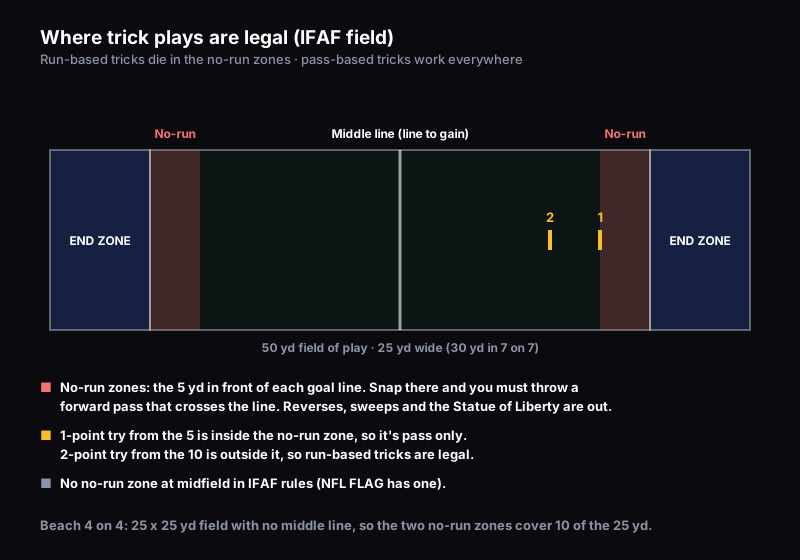
Which trick plays work in which format
IFAF's flag rulebook covers three outdoor formats: 5v5 (50 × 25 yd field), Flag 7 on 7 (the same rules on a 30-yard-wide field) and Beach Flag 4 on 4 (25 × 25 yd on sand, 5-second pass clock, 5-yard blitz distance). Indoor flag uses the beach rules, or the 5v5/7v7 rules if the facility is big enough. Because the play rules are shared, legality is identical across IFAF formats. What changes is how much room you have. NFL FLAG, the most common US youth rulebook, is included for comparison.
| Play | IFAF 5v5 | IFAF 7v7 | Beach 4v4 | NFL FLAG | Youth |
|---|---|---|---|---|---|
| Flea flicker | ✓ | ✓ | ✓ | ✓ | Medium |
| QB throwback | ✓ | ✓ | ✓ | ✓ | Medium |
| Double pass | ✓ | ✓ | ✓ | ✓ | Advanced |
| Reverse / double reverse | Outside no-run zones | Outside no-run zones | Outside no-run zones | Outside no-run zones* | Easy |
| Statue of Liberty | Outside no-run zones | Outside no-run zones | Outside no-run zones | Outside no-run zones* | Medium |
| Center leak | ✓ | ✓ | ✓ | ✓ | Easy |
| Airborne lateral | ✓ | ✓ | ✓ | ✗ | Advanced |
| Designed tip pass | ✓ | ✓ | ✓ | Not addressed | Advanced |
| Jet motion fake | ✓ | ✓ | ✓ | ✓ | Easy |
| Hard count | ✓ | ✓ | ✓ | ✓ | Easy |
| Fake spike | ✓ | ✓ | ✓ | ✓ | Medium |
| Try specials | ✓ | ✓ | ✓ | ✓ | Easy |
* NFL FLAG also has a no-run zone 5 yards before midfield. Youth ratings: Easy = any age that can take a hand-off cleanly; Medium = roughly 10 and up; Advanced = experienced teens and adults.
Two format notes matter more than the table. In 7v7, the extra five yards of width makes reverses and throwbacks far more dangerous, because the backside has more grass. In beach 4v4, the 5-second pass clock stops the moment the QB hands off (R 7-1-3-g), so hand-off tricks buy time the QB wouldn't otherwise have. But the field is only 25 yards long with no middle line, so the two no-run zones cover 10 of those yards. Run-based tricks only fit between the 5-yard lines.
12 legal trick plays
Seven of these have their own page in the free play library, ready to add to the play maker and print on a wristband: flea flicker, QB throwback, double pass, reverse, Statue of Liberty, center leak and jet motion fake.
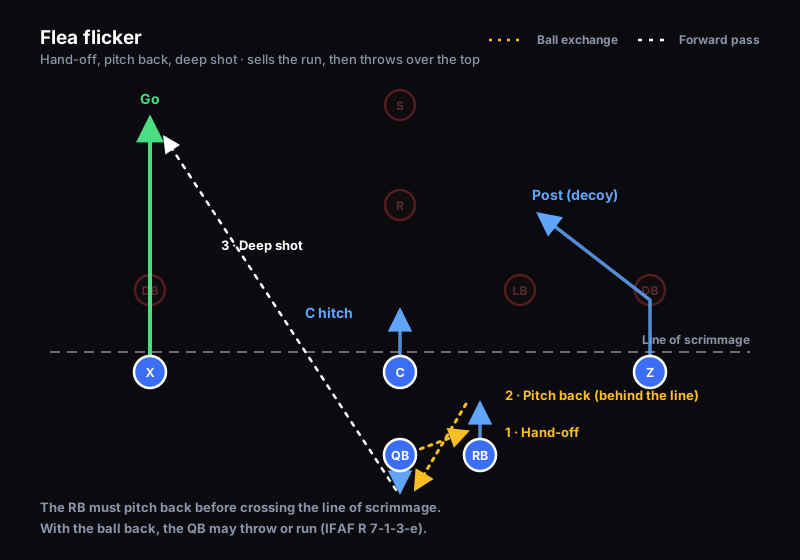
1. Flea flicker
How it works: the QB hands off to the running back, who takes two steps toward the line, stops, and pitches it back. The QB then throws deep to a receiver whose defender crept up to stop the run.
Why it's legal: multiple exchanges behind the line are allowed (R 7-1-5-a, R 7-2-1), and once the ball has been returned the QB may throw or run (R 7-1-3-e). The deep pass is the play's only forward pass.
Watch for: the hand-off frees every defender inside 7 yards to rush, and the pitch back has to happen before the running back reaches the line. Run it after you've shown the defense two or three real hand-offs.
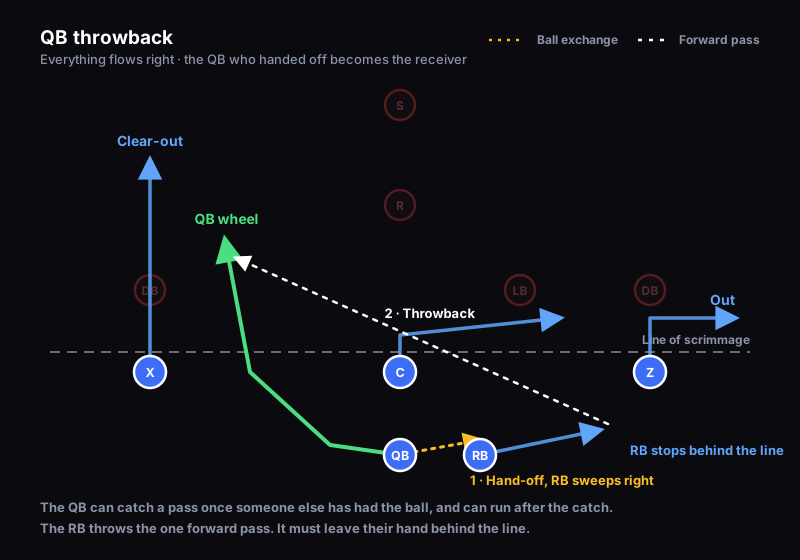
2. QB throwback
How it works: the QB hands off to a running back sweeping right, then slips out the other way on a wheel route. The running back pulls up behind the line and throws back across the field to the QB.
Why it's legal: the QB is an eligible receiver once they've given up the ball, and the "can't run" rule no longer applies because the ball was possessed by someone else and returned (R 7-1-3-e). So the QB can run after the catch, too.
Watch for: the running back must release the pass while still behind the line (R 7-3-2). Players who can throw on the run are rare, so practice it with whoever actually can.
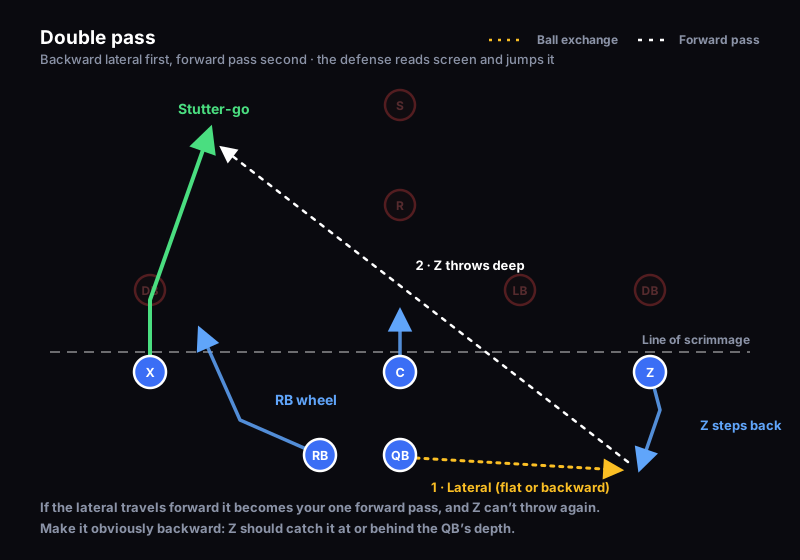
3. Double pass
How it works: a receiver steps back behind the QB and catches what looks like a quick screen. Instead of running, they throw deep to a receiver who ran a stutter-go.
Why it's legal: the first throw is a backward pass, not a forward one. A pass that travels parallel to the line still counts as backward (R 2-10-1), so the second throw is the single legal forward pass.
Watch for: if the lateral travels even slightly forward, it becomes your one forward pass and the second throw is illegal (R 7-3-2-c: 5 yards and loss of down). Have the receiver catch it at or behind the QB's depth so there's no doubt.
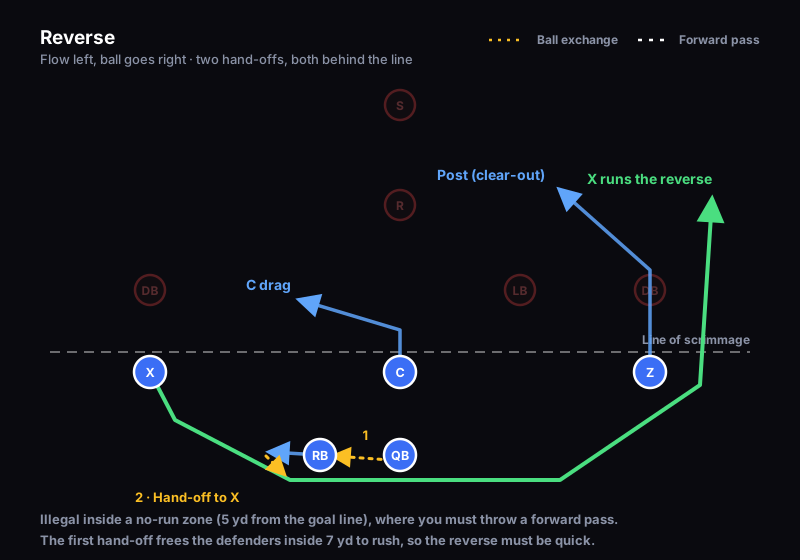
4. Reverse and double reverse
How it works: the running back takes a hand-off going left, and a receiver coming from the left loops underneath to take a second hand-off going right. In the double reverse, a third player takes it back the other way.
Why it's legal: unlimited hand-offs, as long as both players are behind the line (R 7-1-5-a).
Watch for: it's illegal from inside a no-run zone, where the play must end in a forward pass. It also releases the rushers on the first hand-off, so a double reverse against a fast rusher often loses yards. It's the best first trick play for young teams because it has no throws.
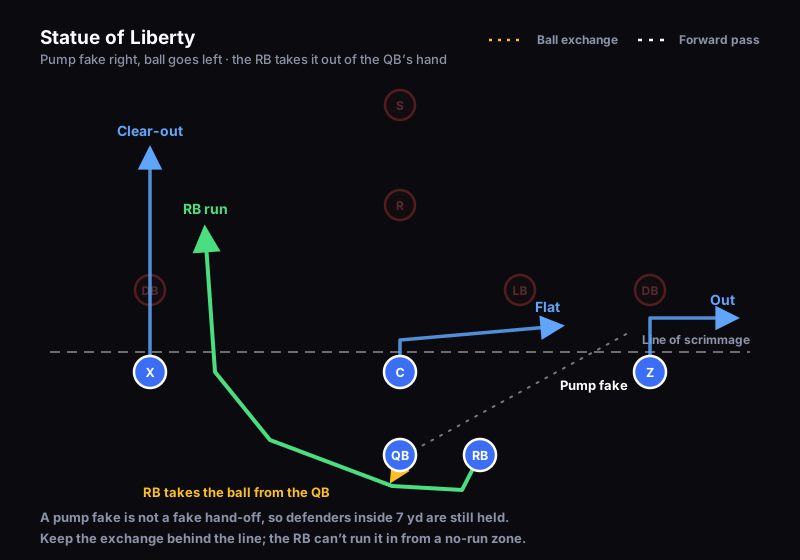
5. Statue of Liberty
How it works: the QB drops back and pump-fakes to the right, holding the ball high. The running back circles behind and takes the ball out of the QB's hand, then runs to the left while every receiver flows right.
Why it's legal: it's a hand-off behind the line. Here's a flag-football bonus: a pump fake isn't a fake hand-off (R 2-9-1), so defenders inside 7 yards are still held behind the line until the real exchange happens.
Watch for: keep the exchange clean. If the ball hits the ground, the play is dead on the spot (R 7-2-4). Not legal inside a no-run zone.
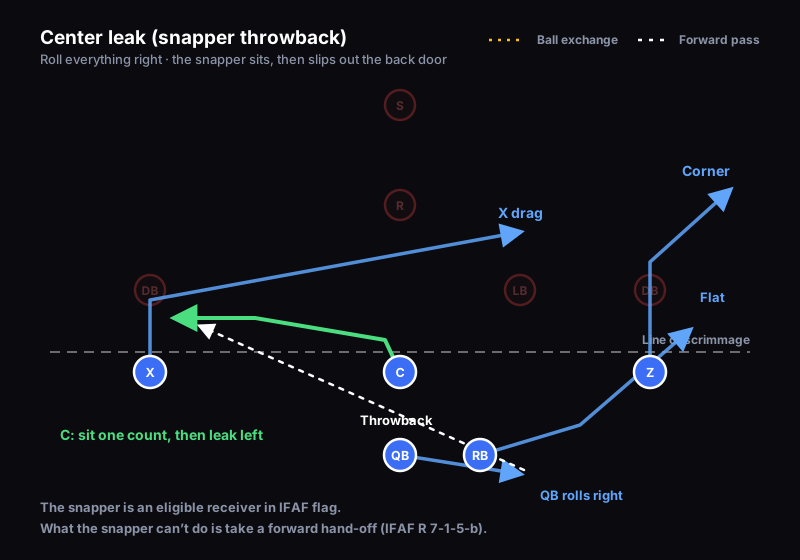
6. Center leak (snapper throwback)
How it works: everyone flows right: the QB rolls out, a receiver drags across, the running back runs to the flat. The center snaps, sits for one count as if staying home, then leaks back to the left, and the QB throws back across the field.
Why it's legal: the snapper is an eligible receiver. IFAF's own approved ruling AR 7-3-3-I features a snapper running a route. The only thing a snapper can't do is take a forward hand-off (R 7-1-5-b).
Watch for: the receivers flowing right mustn't drift into defenders' paths to free the center. That's shielding (R 9-2-2-a).
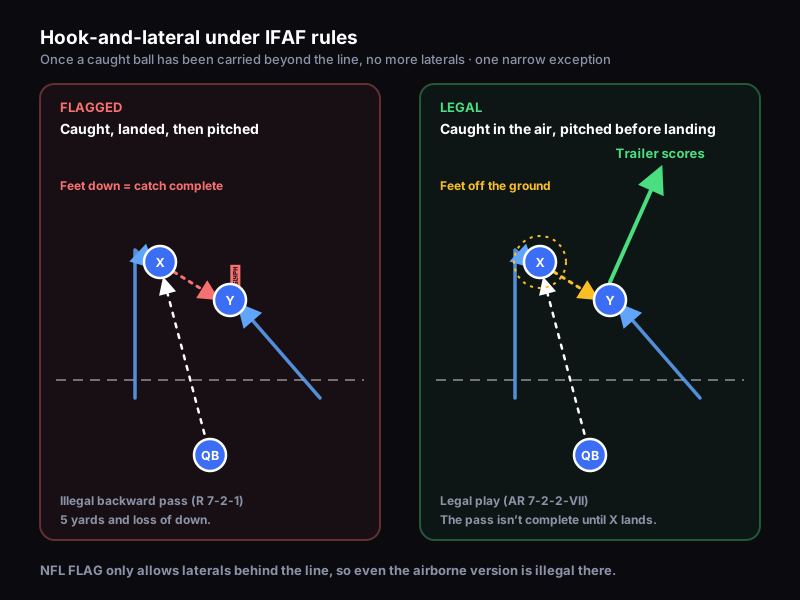
7. Airborne lateral (the legal hook-and-lateral)
How it works: a receiver runs a hitch, leaps for the pass, and pitches it back to a trailing teammate before landing. The trailer is already running upfield.
Why it's legal: IFAF approved ruling AR 7-2-2-VII says a pass that's controlled in the air isn't complete until the receiver returns to the ground. Pitch it back before that, and the teammate's catch completes the original pass. If the receiver was already touching the ground, it's a foul for an illegal backward pass.
Watch for: this is a precise, high-skill play. One foot down before the pitch and it's 5 yards and loss of down. Not legal under NFL FLAG, which allows laterals only behind the line.
8. Designed tip pass
How it works: the QB throws to a receiver on a short route who deliberately bats the ball forward to a teammate running behind them, often in the end zone.
Why it's legal: batting a forward pass forward is allowed. IFAF's AR 7-2-5-I rules exactly this play a touchdown. What's illegal is batting a backward pass forward (R 7-2-5-c).
Watch for: it's low-percentage. Use it as a once-a-season goal-line surprise, not a staple.
9. Jet motion fake
How it works: a receiver runs flat across the formation at the snap. The QB fakes the hand-off to them, then throws to the side the motion just left.
Why it's legal: one player may be in motion at the snap, as long as they aren't moving toward the opponent's goal line (R 7-1-3-d). Any shift before that must be finished with everyone still for one full second (R 2-8-1).
Watch for: a fake hand-off releases the defenders inside 7 yards (R 7-1-4-f), and it does not stop the 7-second clock. Make the throw quick.
10. Hard count
How it works: the QB varies the snap cadence to draw a jumpy defender across the line before the snap.
Why it's legal: a defender who reacts to the QB's snap count and crosses the line is offside (AR 7-1-4-I). The offense may not make body movements that simulate the start of a play (R 7-1-3-c), and the snapper may not fake the snap (R 7-1-2), so the trick must be the voice only.
11. Fake spike
How it works: in the last two minutes, the offense hurries to the line as if to stop the clock. The QB mimes a spike and throws to a receiver who stayed wide.
Why it's legal: there's no intentional grounding in IFAF flag (AR 7-3-1-I), and a real spike behind the line is simply an incomplete pass that stops the clock in the final two minutes (R 3-2-5, AR 7-2-4-II). A pump fake before the throw is legal too.
12. Try specials: know your distance
IFAF tries are 1 point from the 5-yard line or 2 points from the 10. The 1-point try is snapped from the 5, which puts it inside the no-run zone, so it must be a forward pass that crosses the line. Save your pass-based tricks (flea flicker, double pass, center leak) for 1-point tries. The 2-point try from the 10 is outside the zone, so the reverse and Statue of Liberty are live. Remember the risk: an interception returned for a score on a try is worth 2 points to the defense.
Trick plays for the defense
The defense has tricks too, and in IFAF flag they revolve around the blitz signal. A defender lined up more than 7 yards off the line can raise one hand to become a blitzer, which gives them right of way to the QB. Up to two can do it.
- The signal swap. Two defenders raise hands, one drops it, and a different player raises theirs just before the snap. It's legal: the last two holding the signal have the right of way (AR 7-1-4-IV).
- The fake blitz. A defender signals, then drops back into coverage. There's no foul. A blitzer who doesn't rush simply loses the right of way and plays as a normal defender (R 2-2-6). A defender who drops the hand before the snap can still rush, just without right of way (AR 7-1-4-VII).
- The unannounced rush. Any defender who starts more than 7 yards off the line may cross it at any time during the play without signalling (R 7-1-4-e). A safety sprinting in after the QB rolls out is legal in IFAF. It's not in NFL FLAG, where rushers must signal and delayed rushes aren't permitted.
To stop the offense's tricks, keep one backside defender home on every play, watch any QB who hands off and then drifts (that's the throwback), and remember the no-run zones take the reverse off the table near the goal line.
10 trick plays that get flagged
Borrowed from tackle football or YouTube highlight reels, these draw a flag under IFAF rules.
- Hook-and-lateral after landing. Catch, land, pitch = illegal backward pass (R 7-2-1, AR 7-2-2-VII). 5 yards and loss of down.
- Pitching after the runner crosses the line. Same rule: once the ball has been carried beyond the line, no backward passes. 5 yards and loss of down.
- Direct snap to "unlock" a runner. Whoever takes the snap is the QB and can't run past the line (R 2-2-3, R 7-1-3-e). Illegal run: 5 yards and loss of down.
- Pick or rub routes. A moving receiver getting in a defender's path is shielding (R 9-2-2-a), even with no contact. 5 yards.
- Fumblerooski. A ball on the ground is dead. A fumble dies where possession was lost, and a deliberate drop is treated as an incomplete pass (R 7-2-4, AR 7-2-4-II).
- Fake punt or field goal. There are no kicks in flag football, and kicking the ball is illegal (R 2-9-6, R 6-1-1). 5 yards and loss of down.
- Snapper fakes the snap. The snapper may not simulate the start of the snap (R 7-1-2). 5 yards, and the ball stays dead.
- Shovel pass for the score inside the no-run zone. A forward pass caught behind the line isn't a forward pass play, so it's an illegal run play (AR 7-1-3-V). 5 yards and loss of down.
- A second forward pass. Throwback after a completion downfield, or a "lateral" that went forward followed by another throw (R 7-3-2-c). 5 yards and loss of down.
- Batting a backward pass forward. Volleying a bad snap or a pitch forward to a teammate is illegal (R 7-2-5-c, AR 7-2-5-II and III). 5 yards and loss of down.
Playing under NFL FLAG or another rulebook?
NFL FLAG runs most US youth leagues, and its rulebook (revised March 2025) differs from IFAF in ways that matter for trick plays:
- Two no-run zones per drive: 5 yards before midfield as well as 5 yards before the goal line.
- Laterals behind the line only. Neither version of the hook-and-lateral is legal.
- No "center sneak": the QB may not hand off, pitch or lateral to the center first. The center can still catch a pass.
- Every forward pass must cross the line, including shovel passes.
- The snap must go between the center's legs; IFAF doesn't require that.
- Rushers must signal and go at the snap. After a hand-off, pitch or lateral, every defender may rush.
- Youth: NFL FLAG's 8U guidelines remove no-run zones in league play (tournaments keep them), which makes the reverse legal anywhere on the field.
Non-IFAF 7v7 passing leagues and 8v8 or 9v9 rec leagues usually write their own rules. Before you install any trick play there, check three things in your book: whether running plays are allowed at all, where laterals are allowed, and when the QB can run. Those three answers decide nearly every play in this guide.
Coaching trick plays with youth teams
IFAF has no separate youth rulebook. Its national options let organizers shrink the field, shorten games and use non-pop flags, but the play rules stay the same. So the limit for kids is skill, not legality.
- One trick per season is plenty for players under 10. The reverse or center leak works best, because nobody has to throw twice.
- Drill the exchange, not the play. Most youth trick plays die on a dropped hand-off, and a ball on the ground is dead.
- Teach "behind the line" physically. Put a cone on the line of scrimmage in practice and have players pitch well before it.
- Put it on the wristband with a simple name like "Flea" or "Statue" so players remember it under pressure. The free playbook maker prints the card.
Frequently asked questions
Is the hook-and-lateral legal in flag football?
Not the classic version. Under IFAF rules a backward pass is only legal if the ball hasn't been carried beyond the line of scrimmage, so a receiver who catches a pass downfield, lands, and then pitches it is fouling: 5 yards and loss of down. The one legal version is a receiver who controls the ball in the air and pitches it back before landing. NFL FLAG only allows laterals behind the line, so neither version is legal there.
Can the quarterback run in IFAF flag football?
Not directly. The quarterback (whoever first gets the ball after the snap) can't run past the line of scrimmage unless the ball has been possessed by another player and returned to them, or a defender touched a pass in flight. That's why the flea flicker and QB throwback work: once the ball comes back, the QB can run.
Are trick plays allowed in the no-run zone?
Only pass-based ones. In IFAF flag the no-run zones are the 5 yards in front of each goal line. When the ball is snapped there, the offense must make a forward pass play that crosses the line of scrimmage, so reverses, sweeps and the Statue of Liberty are out. The flea flicker, double pass and QB throwback still work because they end in a forward pass.
What's the best trick play for youth flag football?
The reverse and the center leak. Both use simple hand-offs or routes, the ball never has to be thrown twice, and kids can learn them in a practice or two. Save the double pass and airborne lateral for older, more experienced players.
Can the center catch a pass in flag football?
Yes. In IFAF flag the snapper is an eligible receiver, which is what makes the center leak work. The snapper just can't take a forward hand-off. NFL FLAG also lets every player catch passes, but it doesn't allow the QB to hand off, pitch or lateral to the center first.
Are pick plays legal in flag football?
No. IFAF calls it shielding: a moving offensive player without the right of way who gets in a defender's path. It's a 5-yard foul even with no contact. Crossing routes are fine as long as the receiver isn't running into the defender's lane to obstruct them.
See which trick plays actually work
ReadyRef logs every play with downs, yardage and the result, so you can tell whether the flea flicker is a weapon or a wasted down, and the ref has the rules at hand when the other bench says it's illegal.